News

Latest Articles

Begini Cara Kerja Solar Panel Off-Grid Essens Renewable.jpg
TECHNOLOGY

How Essens Renewable’s Off-Grid Solar Panel System Works

The off-grid solar panel system is one of Essens Renewable’s flagship solutions, offering various benefits for users. Unlike on-grid systems, off-grid systems are not directly connected to the PLN grid, but instead rely on batteries. So, how is electricity delivered from the solar modules to the user’s building? Read on for a full explanation of how an off-grid solar panel system works.

What Is an Off-Grid Solar Panel System?

An off-grid system refers to a solar power generation system that operates independently without being connected to the national electricity grid. This system generates electricity from solar modules and delivers it to the user’s building electrical network. Meanwhile, any surplus energy produced is stored in batteries for use at night, when grid electricity is unavailable, or when weather conditions are unfavorable.

Read Also: Essens Renewable, EPC Solar Solutions for Solar Panel Installation

Components of an Off-Grid Solar Panel System

An off-grid system relies on batteries to store electricity for later use. An off-grid solar panel system consists of key components that function to capture, store, and distribute solar energy, including solar modules, an inverter, DC/AC protection and disconnection devices (DC isolator/AC breaker), batteries, a charge controller, and energy management devices to maintain system stability and optimize operational performance.

Advantages of an Off-Grid Solar Panel System

An off-grid system operates independently without being connected to the local electricity grid. It generates electricity directly from solar energy, stores it in batteries, and uses it when needed.

As a result, an off-grid system offers the advantage of full control over the electricity supply. Users generate and consume their own electricity, which means their energy usage is not affected by fluctuations in energy prices or monthly utility bills. In addition, off-grid solar panel systems are highly suitable for installation in remote areas.

Read Also: Renewable Energy in Indonesia: Essens Renewable Solar Panel Solutions

How Essens Renewable’s Off-Grid Solar Panel System Works

Below is how an off-grid solar panel system converts sunlight into electricity and delivers it to the user’s building:

  1. The solar modules absorb sunlight and convert it into electrical energy through the photovoltaic effect.
  2. The charge controller regulates the flow of electricity from the solar modules to the batteries, and from the backup generator to the batteries. This component controls the rate of electricity entering or leaving the batteries to prevent overcharging. As a result, battery life can be extended, while the efficiency and safety of the off-grid system are maintained.
  3. The regulated electrical energy is then stored in the batteries. This component is essential in an off-grid system because it stores excess energy generated by the solar modules. The electricity stored in the batteries can be used when sunlight is limited, ensuring a continuous electricity supply.
  4. The inverter converts direct current (DC) into alternating current (AC).
  5. The electricity, now in the form of alternating current, is used directly by the building load.

That is an overview of Essens Renewable’s off-grid solar panel system, from its definition and components to its advantages and how it works to generate and deliver electricity to a building load. If you need consultation regarding solar panel installation, Essens Renewable, as a solar EPC company in Indonesia, is ready to help you find the most suitable solution for your needs.

Our customer portfolio spans various sectors, including commercial, industrial, and utility-scale segments. Essens Renewable also works with different types of businesses, ranging from factories, warehouses, office buildings, and shopping centers to large-scale energy projects, delivering solar power solutions tailored to the specific needs of each user.

Source:

  • https://pvcase.com/blog/off-grid-solar-power
  • https://www.researchgate.net/figure/Off-Grid-Solar-System-Flow-chart-the-overall-reliability-and-performance-of-standalone-PV_fig9_379925240
Admin EssensApril 2, 2026
Begini Cara Kerja Solar Panel On-Grid Essens Renewable.jpeg
TECHNOLOGY

How Essens Renewable’s On-Grid Solar Panel System Works

The on-grid solar panel system is one of the three types of solar panel systems offered by Essens Renewable. This system generates electricity from solar modules and channels it into a building’s electrical network. But how exactly is electricity delivered from the solar modules to the building? Read on for a full explanation of how an on-grid solar panel system works.

What Is an On-Grid Solar Panel System?

An on-grid system refers to a solar power generation system that is directly connected to the national power grid operated by PLN. In this setup, the electricity generated by the solar system is prioritized for direct use by the building load during the day. When solar generation is insufficient, electricity supply is automatically provided by the PLN grid.

Read Also: Essens Renewable: Delivering Utility-Scale Solar EPC Solutions

Components of an On-Grid Solar Panel System

A solar power system generates electricity from sunlight, which is converted into electrical energy through the photovoltaic effect in solar modules. In practice, solar power systems can be installed on rooftops or on the ground, depending on the needs of various industrial sectors.

Therefore, the components of an on-grid solar panel system include solar modules, an inverter, DC/AC protection and disconnection devices (DC isolator/AC breaker), electricity meters (depending on the interconnection scheme), cables, and mounting structures. An on-grid system also allows electricity from the solar power system to be used directly by the load and/or exported to the grid in accordance with applicable regulations.

Advantages of an On-Grid Solar Panel System

As explained earlier, an on-grid system is directly connected to the national electricity grid. As a result, it offers advantages in terms of easier and faster installation, allowing electricity to be used directly by the customer. In addition, on-grid solar panel systems have relatively low maintenance costs because they do not require batteries or other additional supporting components.

Read Also: 5 Essens Renewable Capabilities Delivering Environmentally Friendly Energy

How Essens Renewable’s On-Grid Solar Panel System Works

Below is how an on-grid solar panel system converts sunlight into electricity and delivers it to a building:

  1. The solar modules absorb sunlight and convert it into electrical energy through the photovoltaic effect.
  2. The inverter converts direct current (DC) into alternating current (AC).
  3. The AC Combiner, or Solar AC Distribution Panel, installed between the inverter and the load, functions to provide protection against overloads and short-circuit risks.
  4. The electricity, now in the form of alternating current, is used directly by the building load.
  5. When electricity generation from the solar modules is not sufficient to meet the load demand, or during nighttime, electricity from the PLN grid becomes the main power supply for the building load.
  6. The Net Meter records the amount of electricity supplied from the PLN grid to the building load before it is delivered to the building. At the same time, the Energy Meter allows the inverter to read power from the grid and control power production. As a result, no power is exported to the grid.

The electricity generation from the solar modules can also be monitored regularly by users through an application installed on their devices. So far, Essens Renewable’s on-grid solar panel systems have been used in various commercial buildings.

That is an overview of Essens Renewable’s on-grid solar panel system, from its definition and components to its advantages and how it works to generate and distribute electricity to buildings. If you need consultation regarding solar panel installation, Essens Renewable, as a solar EPC company in Indonesia, is ready to help you find the most suitable solution for your needs.

Source:

  • https://www.hinen.com/blogs/energy-storage/what-is-an-on-grid-solar-system

Admin EssensApril 2, 2026
EDGE Komitmen Essens Renewable di Setiap Proyek.jpg
TECHNOLOGY

EDGE: Essens Renewable’s Commitment in Every Project

Customer satisfaction is built on many factors, one of which is the quality of work and products. This is crucial because it can influence the long-term business relationship between a company and its customers.

What Are Work Quality and Product Quality?

Both work quality and product quality are equally important in determining customer satisfaction. However, many people assume that quality is limited to simply delivering good results, when in fact its meaning is much broader than that.

Work quality refers to the ability to meet the expectations of both customers and the company. These expectations can be subjective, as each customer may have different priorities and objectives. That is why understanding each customer’s needs before starting any work is essential.

Product quality, meanwhile, refers to how well a product performs in accordance with the expectations of both the manufacturer and the end user. Manufacturers provide information on a product’s specifications, performance capabilities, and warranty. Customers can use this information as a basis for assessing and forming expectations regarding product quality.

Read Also: Essens Renewable, EPC Solar Solutions for Solar Panel Installation

EDGE: Essens Renewable’s Commitment in Every Project

Essens Renewable is a solar EPC company (Engineering, Procurement, and Construction) providing solar energy solutions to meet electricity needs in a more environmentally friendly way. Since 2017, we have maintained consistent year-on-year growth, reflecting strong market demand and sustainable business expansion.

Our growth is driven not only by increasing awareness among communities and industries of the importance of sustainable energy, but also by our ability to maintain the quality of both our work and products in meeting customer expectations. EDGE serves as the foundation of our commitment to ensuring that every project meets established standards of work and product quality.

E (End-to-End In-House Capabilities)

Our end-to-end capabilities allow the entire project lifecycle to be managed internally, from concept and procurement to maintenance. This enables us to monitor and ensure that every process is carried out in accordance with the quality standards we have established.

D (Dedication to Safety, Health, & Environmental Excellence)

We are dedicated to always prioritizing health, safety, and the environment (HSE). We implement a zero-compromise policy across all operational activities to ensure workplace safety and environmental responsibility in every project. This is important because work quality is not only about the outcome, but also about protecting workers and the environment throughout the execution process.

Read Also: QHSE (Quality, Health, Safety, Environment) at Essens Renewable

G (Global-Class Technical Expertise)

Essens Renewable is the only solar EPC company with experience in executing a single project with a capacity of more than 450 MWp. In addition, more than 1.3 GWp of capacity has been successfully commercialized. We also have deep expertise in fixed tilt systems, trackers, and both string and central inverter technologies. Our understanding of products, systems, and technologies ensures that you receive high-quality solutions tailored to your needs.

E (Emerging Advanced Technological Components)

Essens Renewable uses only Tier-1 brands for solar modules and inverters, ensuring that customers always receive products of the highest quality. In addition, we utilize robotic module cleaning systems that deliver optimal performance while reducing water consumption during operation.

Essens Renewable is always committed to delivering high-quality results for all customers by prioritizing both work quality and product quality in every project, whether large or small. This commitment covers every stage, from preparation and installation to maintenance, to ensure customer satisfaction.

If you are interested in using our services, contact us here for a consultation on your needs and how we can help meet them.

Admin EssensApril 1, 2026
EPC Solar Panel Essens Renewable Solusi Energi Terbarukan dengan Berbagai Keunggulan.jpeg
TECHNOLOGY

EPC Solar Panels by Essens Renewable: Renewable Energy Solutions with Various Advantages

Still relying on conventional electricity to meet your energy needs? Now is the time to switch to solar panels as a more modern and sustainable energy solution. In addition to being more environmentally friendly, the use of solar panels has been proven to help reduce electricity bills, decrease dependence on fossil fuels, and lower carbon footprints.

Essens Renewable EPC Solar Panels

To support the use of clean energy, choosing a solar panel system from Essens Renewable is the right decision. Essens Renewable is one of the three fastest-growing utility-scale EPC (Engineering, Procurement, and Construction) companies in India.

As part of its expansion into Indonesia, Essens Renewable combines global expertise with a local approach to deliver renewable energy solutions that are both relevant and effective. Essens Renewable Indonesia provides integrated EPC services, ranging from planning, procurement, and construction to operations and maintenance.

Each project is handled comprehensively to ensure optimal and sustainable results. With extensive experience and a holistic approach, Essens Renewable is able to deliver efficient solar panel solutions tailored to customer needs.

Read Also: Essens Renewable: Delivering Utility-Scale Solar EPC Solutions

Advantages of Essens Renewable EPC Solar Panels

The various advantages offered by Essens Renewable include the following:

Trusted by Various Industrial Sectors

Essens Renewable has become the preferred choice for various industries in delivering reliable solar energy solutions tailored to the specific needs of each sector. Every system is designed to optimize operational efficiency, reduce energy costs, and support sustainability targets.

With a flexible and needs-based approach, Essens Renewable serves a wide range of industries, such as:

  • Energy
  • Data Centers
  • Hospitality
  • Banking
  • Manufacturing
  • Plantations
  • Mining

Providing Customizable Solutions

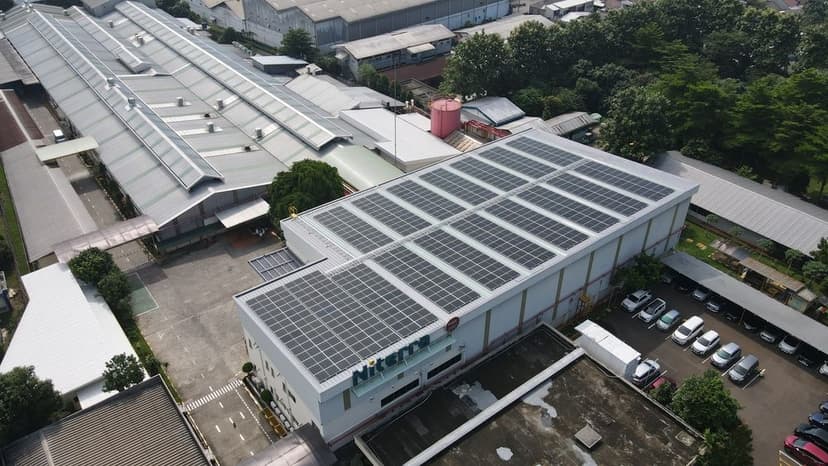
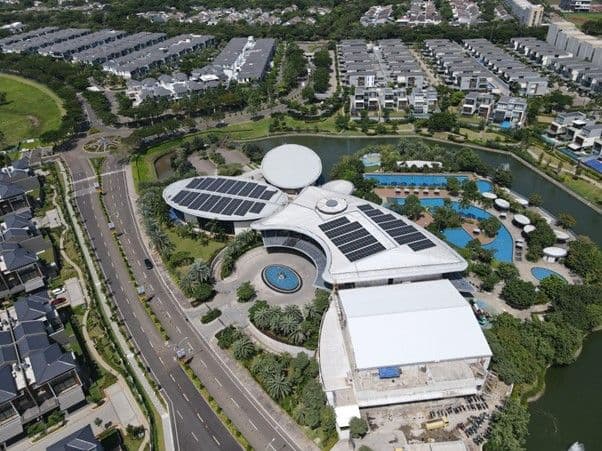
From commercial rooftop installations to large-scale industrial areas, Essens Renewable is designed to adapt to customer needs. Each system is developed based on the type of installation, site area, and energy demand, allowing it to deliver optimal performance and greater cost efficiency.

Essens Renewable offers various solar panel system installation options tailored to site conditions, including:

  • Rooftop
  • Canopy
  • Floating Solar
  • Ground-Mount

Compatible with Various Roof Types

Essens Renewable designs flexible solar energy systems that can be adapted to different building roof structures. Each installation is handled by an experienced technical team to ensure safety standards, optimal energy efficiency, and reliable long-term system performance regardless of construction complexity.

Essens Renewable’s solar panel solutions can be applied to various roof conditions, including:

  • Flat roofs
  • Sloped roofs
  • Tiled roofs
  • Metal roofs

Read Also: Understanding the 3 Types of Solar Panel Systems from Essens Renewable

Implementation of Essens Renewable EPC Solar Panels

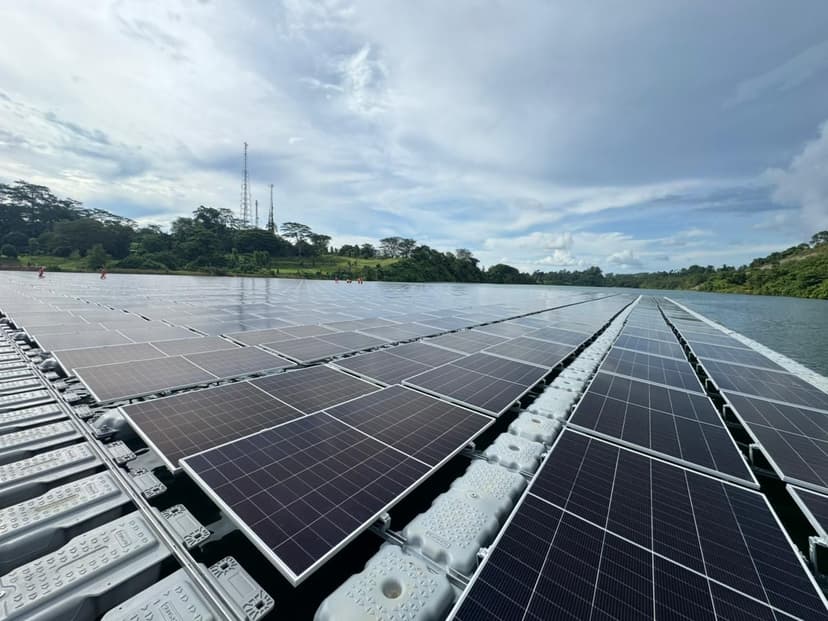
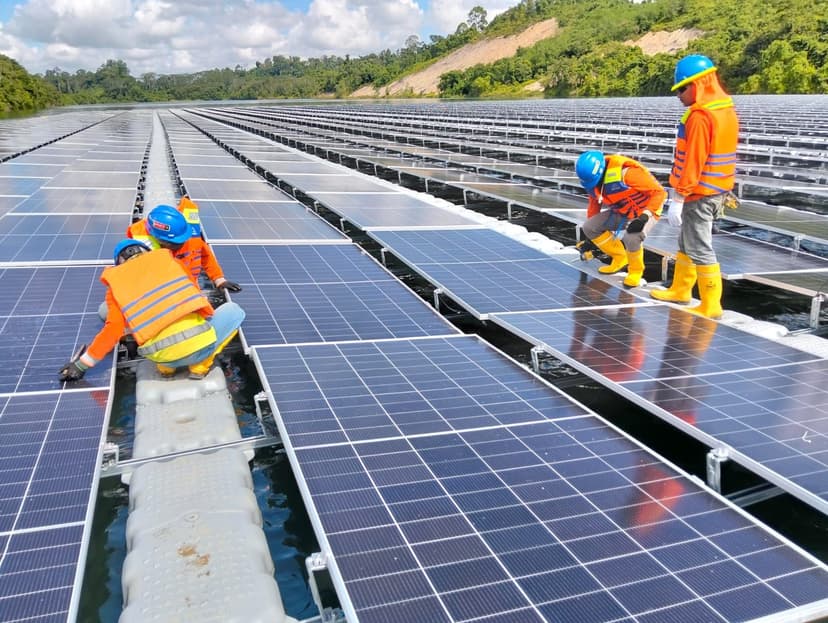
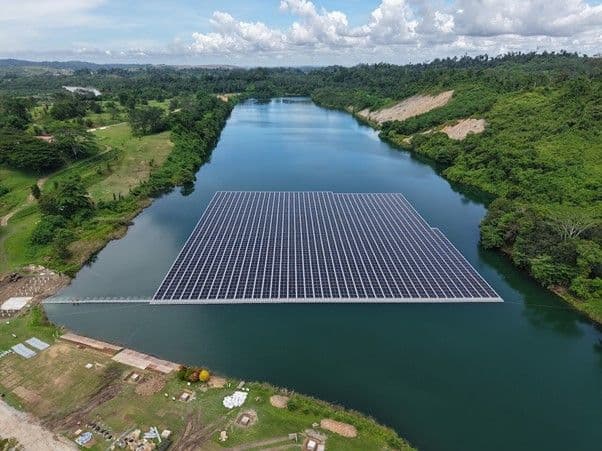
One example of Essens Renewable’s implementation can be found in a mining project in East Kalimantan. This project integrates a 3 MWp floating solar power plant with a Battery Energy Storage System (BESS).

This technology combination provides a more stable and efficient clean energy supply, while also offering the added benefit of reducing water evaporation levels. This solution not only supports operational efficiency but also contributes to sustainability efforts and carbon emission reduction in the industrial sector.

In addition, Essens Renewable also offers other advantages, such as:

  • Prioritizing value, quality, and sustainability to help create long-term positive impacts on the environment.
  • Emphasizing QHSE (Quality, Health, Safety, Environment) to ensure projects are executed in accordance with quality and safety standards.
  • Upholding a commitment known as EDGE, which stands for: [E] End-to-End In-House Capabilities, [D] Dedication to Safety, Health, & Environmental Excellence, [G] Global-Class Technical Expertise, [E] Emerging Advanced Technological Components.

Those are some of the advantages offered by Essens Renewable. Make the switch to solar energy with Essens Renewable, a trusted EPC solar panel service provider in Indonesia. Get the best solution for your energy needs with the support of a professional team and high-quality technology.

Contact us now for more information, or visit the following link for full details. Hope this is helpful!


Admin EssensApril 1, 2026
QHSE (Quality, Health, Safety, Environment) dari Essens Renewable.jpg
TECHNOLOGY

QHSE (Quality, Health, Safety, Environment) at Essens Renewable

QHSE (Quality, Health, Safety, Environment) reflects Essens Renewable’s commitment to ensuring excellent work quality, protecting the health and safety of its workforce, and preserving the environment in every company activity.

Through the consistent implementation of QHSE standards, Essens Renewable supports the development of renewable energy that is safe, sustainable, and responsible in every project it undertakes. Before discussing QHSE further, let’s get to know Essens Renewable here first!

Essens Renewable, EPC Solution for Solar Panels System

Essens Renewable is one of the three fastest-growing EPC (Engineering, Procurement, and Construction) companies in India. In its early days, Essens Renewable was known as RWE Solar India Pvt Ltd and Belectric Photovoltaic India Pvt Ltd. Today, Essens Renewable has expanded its operations to Indonesia.

Backed by Essens Renewable India’s experience, with more than 1 GWp capacity in EPC (Engineering, Procurement, and Construction) projects, Essens Renewable Indonesia brings in-house expertise in construction, procurement, and engineering to support renewable energy development in Indonesia.

Over the years, Essens Renewable has achieved various milestones, such as:

  • Cumulative installed capacity increased by more than 11 times between 2017 and 2022.
  • Surpassed 1,095 MWp and joined the ranks of the top utility-scale EPC companies.
  • Positioned as one of the largest EPC companies in India, with a total cumulative capacity of 1,863.3 MWp in 2022.
  • Continued to grow from 2021 to 2022 despite the challenges of the COVID-19 pandemic and global supply chain disruptions.
  • Built a strong execution track record from 2018 to 2020, demonstrating operational capability and excellence in project delivery.

Read Also: Renewable Energy in Indonesia: Essens Renewable Solar Panel Solutions

QHSE (Quality, Health, Safety, Environment) at Essens Renewable

Essens Renewable is committed to carrying out its operations professionally, safely, with high quality, and in an environmentally responsible manner. We ensure that every business process meets quality standards, protects occupational health and safety, and minimizes environmental impact as part of long-term sustainability.

Quality

Essens Renewable applies strong quality standards at every stage. Through the implementation of internal quality systems and compliance with relevant standards, Essens Renewable delivers solar energy projects that are reliable, high-performing, and exceed industry standards.

Health

The health and well-being of employees, partners, and clients are a priority. To support this, Essens Renewable fosters a safe and healthy work culture through various risk prevention measures and the implementation of work procedures in line with standards established in Indonesia. In addition, we conduct ongoing monitoring to ensure that every team member works in a safe environment.

Safety

Safety is a key element in every Essens Renewable work activity. The company implements strict safety protocols, carries out regular awareness programs and training, and undertakes preventive measures to reduce the risk of incidents at project sites and in related work activities. The ultimate goal is to achieve a zero-accident work environment through continuous improvement.

Environment

For Essens Renewable, sustainability is not merely a result, but the way we work. The company strives to minimize its environmental footprint through resource efficiency, waste reduction, and ecosystem protection at every project site, while continuing to prioritize compliance with applicable regulations.

The advantages of implementing QHSE at Essens Renewable include:

  • Complying with applicable laws, regulations, and other requirements.
  • Preventing workplace accidents, occupational illnesses, and environmental pollution.
  • Continuously improving quality, occupational health and safety, and environmental performance.
  • Providing adequate resources for QHSE implementation.

Read Also: Essens Renewable, EPC Solar Solutions for Solar Panel Installation

In every project it undertakes, Essens Renewable applies a commitment called EDGE.

  • [E] End-to-End In-House Capabilities: the ability of the internal team to manage the project lifecycle from start to finish.
  • [D] Dedication to Safety, Health, & Environmental Excellence: the implementation of policies to ensure safety, occupational health, and environmental protection in every project.
  • [G] Global-Class Technical Expertise: experience in executing large-scale projects, including single projects with capacities of more than 450 MWp and operations exceeding 1.3 GWp.
  • [E] Emerging Advanced Technological Components: the use of Tier-1 solar modules and inverters, as well as the implementation of robotic module cleaning systems.

That is an overview of QHSE at Essens Renewable. With this commitment, Essens Renewable can become a partner for companies looking to transition to solar energy across various industries, including:

  • Manufacturing
  • Mining
  • Plantations
  • Industrial estates
  • Distribution center warehouses
  • Hotels
  • Banks
  • Gas stations

As proof of its commitment to quality standards, occupational health and safety, and EPC project management, Essens Renewable has obtained the following ISO certifications:

  • ISO 9001:2015: a quality management system that shows the company has standardized processes to maintain service and project quality consistently.
  • ISO 14001:2015: an environmental management system that demonstrates a framework for managing environmental impacts and continuously improving environmental performance.
  • ISO 45001:2018: an occupational health and safety management system that supports OHS practices to reduce the risk of workplace accidents and occupational illnesses in operational activities.

For more information about Essens Renewable’s solar energy solutions, please visit this page or contact our team.

Admin EssensMarch 13, 2026
Essens Renewable, Hadirkan Solusi EPC Energi Surya Skala Utilitas.jpg
TECHNOLOGY

Essens Renewable: Delivering Utility-Scale Solar EPC Solutions

Global warming has become a serious challenge to the sustainability of life on Earth. The rise in average global temperatures increases the likelihood and intensity of various extreme weather events, including heatwaves, extreme rainfall that can trigger floods, and droughts in a number of regions.

If left unaddressed, these conditions risk worsening environmental quality and threatening ecosystem balance in the long term. Therefore, to slow the rate of global warming, accelerating the transition to cleaner and more sustainable energy sources is essential. Solar energy is a relevant solution because it uses sunlight as an abundant renewable resource and generates electricity without releasing carbon emissions.

For the benefits of solar energy to be realized optimally, its implementation must be properly planned and executed. This is where the EPC (Engineering, Procurement, and Construction) approach plays a role in ensuring that solar energy system projects run smoothly.

Getting to Know Essens Renewable Better

Essens Renewable is an EPC (Engineering, Procurement, and Construction) service provider for the development of reliable, efficient, and sustainability-oriented utility-scale solar energy systems. We are recognized as one of the three fastest-growing EPC companies in India.

Before being renamed Essens Renewable, the company previously operated under the names RWE Solar India Pvt Ltd and Belectric Photovoltaic India Pvt Ltd. This journey has strengthened the company’s technical and managerial foundation in delivering innovative and competitive solar energy solutions in the global market.

Not only focused on India, Essens Renewable has also expanded its operations to Indonesia, bringing international experience and expertise. This expansion is part of the company’s commitment to supporting the acceleration of the clean energy transition and the development of renewable energy infrastructure in Indonesia.

Supported by comprehensive technical planning, the procurement of high-quality components, and standardized construction execution, Essens Renewable is committed to delivering environmentally friendly solar energy solutions while providing long-term investment value.

Read Also: Essens Renewable, EPC Solar Solutions for Solar Panel Installation

Essens Renewable’s Advantages as Solar Energy Solutions Provider

So, why choose Essens Renewable as your solar EPC partner? Here are some of the advantages we offer.

Prioritizing Value, Quality, and Sustainability

Sustainability is not merely a slogan for Essens Renewable, but the foundation of every decision. Through PV solutions and innovative engineering approaches, Essens Renewable supports individuals, businesses, and communities in reducing their carbon footprint and accelerating the transition to clean energy.

This commitment is not only focused on solar power generation, but also includes environmental responsibility at every stage of the project. Essens Renewable consistently strives to reduce dependence on fossil fuels, lower greenhouse gas emissions, and optimize land use.

Each solution is designed to deliver long-term environmental impact while also creating added value for stakeholders. We also support community resilience, strengthen local economies, and create employment opportunities.

Emphasizing QHSE (Quality, Health, Safety, Environment)

Essens Renewable also emphasizes QHSE (Quality, Health, Safety, and Environment) to ensure projects are carried out in accordance with quality and safety standards.

  • Quality: In terms of quality, high standards are applied from design, procurement, and construction through to operations.
  • Health: In terms of occupational health, Essens Renewable creates a safe and healthy work environment through preventive measures and continuous monitoring.
  • Safety: In terms of safety, strict workplace safety protocols are implemented, including building a culture of awareness and conducting regular training to prevent incidents.
  • Environment: In terms of the environment, Essens Renewable strives to minimize its environmental footprint through resource efficiency, waste reduction, and ecosystem protection in every project.

Read Also: Renewable Energy in Indonesia: Essens Renewable Solar Panel Solutions

Upholding a Commitment Called EDGE

Essens Renewable has a commitment called “EDGE,” which stands for:

  • [E] End-to-End In-House Capabilities: Essens Renewable has internal capabilities to manage the entire project lifecycle, from concept, engineering, and procurement to construction, operations, and maintenance.
  • [D] Dedication to Safety, Health, & Environmental Excellence: In the areas of safety, health, and environment, Essens Renewable implements strict HSE policies and standards to ensure safe and responsible work practices.
  • [G] Global-Class Technical Expertise: From a technical capability standpoint, Essens Renewable has experience in executing single projects with capacities of more than 450 MWp, as well as a track record of more than 1.3 GWp in installed capacity.
  • [E] Emerging Advanced Technological Components: In terms of components and technology, Essens Renewable uses Tier-1 modules and inverters, as well as robotic module cleaning systems to support water efficiency and plant performance.

That is a brief overview of Essens Renewable. It is time to transition to solar energy with Essens Renewable, a trusted EPC Solar Panel service provider in Indonesia. For more information, check here or contact us.


Admin EssensMarch 12, 2026
5 Keahlian Essens Renewable Hadirkan Energi Ramah Lingkungan.jpeg
TECHNOLOGY

5 Essens Renewable Capabilities Delivering Environmentally Friendly Energy

Climate change refers to long-term changes in temperature and weather patterns. These changes can occur naturally, but in recent decades they have increasingly been influenced by human activities. The causes include rising greenhouse gas emissions from fossil energy use, land-use changes, and industrial and agricultural activities.

Its impacts can be seen in increases in average global temperatures, changes in rainfall patterns, and sea-level rise of 1.2 cm per year. These conditions increase the risk of extreme weather events and may affect food security, including an increased risk of crop failure.

As part of efforts to prevent global temperatures from rising by 2°C due to greenhouse gas emissions, Indonesia has committed to achieving Net-Zero Emissions by 2060. This commitment, of course, must be supported by all parties, both individuals and business actors.

Solar Panels to Support Net-Zero Emission Commitment

One way to help achieve Indonesia’s Net-Zero Emission 2060 target is by utilizing solar energy to generate electricity through solar panel technology, namely semiconductor devices that produce electricity when exposed to sunlight.

Solar panels work by utilizing sunlight to generate electricity without producing greenhouse gas emissions. In addition, sunlight is a renewable energy source in Indonesia that is abundantly available, although its intensity may decrease under certain weather conditions, such as during cloudy or overcast skies.

Read Also: Essens Renewable, EPC Solar Solutions for Solar Panel Installation

5 Essens Renewable Capabilities Delivering Environmentally Friendly Energy

Essens Renewable is one of the three largest and fastest-growing utility-scale solar EPC (Engineering, Procurement, and Construction) companies in India and is now expanding its network into Indonesia.

We are ready to support industrial sectors in Indonesia that want to contribute to the Indonesia Net-Zero Emission 2060 target by providing fully integrated solar energy solutions, from initial concept to project completion.

Here are 5 Essens Renewable capabilities in delivering environmentally friendly energy for your business:

1. Site Survey

Our expert team will conduct a direct survey at your business location to analyze site conditions and electricity demand for your operations. This site assessment includes determining the most effective placement of solar panel system components to maximize sunlight absorption and optimize system performance.

2. Permitting

Based on the Regulation of the Minister of Energy and Mineral Resources No. 2 of 2024, companies applying for solar energy system or solar panel installations are required to obtain the necessary permits and certificates first, such as the Certificate of Operational Worthiness (SLO) issued by a Technical Inspection Institution (LTI). In addition, the applicant company must also secure an operational permit for the solar energy system from the government. We are ready to assist with the permitting process according to your company’s needs.

3. Installation

The installation process will be carried out by professional experts to ensure technical accuracy, efficient implementation, and reliable long-term performance. The installation will also prioritize workplace safety to minimize the risk of occupational accidents, in line with our commitment to Health, Safety, and Environment (HSE).

Read Also: Renewable Energy in Indonesia: Essens Renewable Solar Panel Solutions

4. Operations

After the installation process is completed, we will ensure that the solar panel system operates properly without any issues. In addition, we are also ready to carry out periodic monitoring to ensure that the system continues to perform well and that any necessary actions can be taken promptly if issues are identified, thereby minimizing the risk of downtime caused by disruptions in electricity supply.

5. Maintenance

The maintenance process will be handled by experts in the field to ensure that servicing and repairs are carried out according to actual needs. Maintenance in the form of panel cleaning is also part of the services we can provide to ensure that the solar panel system continues to function properly.

For those of you who want to support Indonesia’s commitment to achieving Net-Zero Emissions, you can start by shifting your electricity source to a more environmentally friendly one, by using a solar panel system from Essens Renewable.

If you are interested or would like to consult with us first, please contact us for more information.

Sources:

  • https://www.brin.go.id/news/110603/indonesia-targetkan-pencapain-net-zero-emission-pada-2060
  • https://iesr.or.id/wp-content/uploads/2021/05/Final-Dir-LH-IESR-Net-Zero-Emission_V1.pdf
Admin EssensMarch 11, 2026
Sistem Solar Panel.jpg
TECHNOLOGY

Understanding the 3 Types of Solar Panel Systems from Essens Renewable

Solar energy is one of the most efficient and economical renewable energy sources. This clean energy source allows people to harness an unlimited resource, sunlight, and convert it into energy through a completely clean process that produces no emissions.

Interestingly, solar energy can be utilized through several solar panel system configurations that can be tailored to user needs. What are these three types of solar panel systems? Read the full explanation in this article.

Solar Panel System Components

Solar panel systems utilize sunlight, which is then converted into electricity through the photovoltaic effect in solar panel modules. Their implementation may take the form of rooftop solar panel installations or ground-mounted systems, both of which can be adapted for various sectors.

The standard components of a solar panel system include solar panel modules, inverters, DC/AC protection and disconnect devices (DC isolator/AC breaker), electricity meters (depending on the interconnection scheme), cables, and mounting structures. In an on-grid system, electricity generated by the solar power system is used directly by the load and/or exported to the grid in accordance with applicable regulations.

In addition, solar panel systems that are not connected to the national electricity grid (off-grid or hybrid) are also equipped with a set of additional components, such as batteries, charge controllers, and energy management devices to maintain system stability and optimize operations.

Read Also: Renewable Energy in Indonesia: Essens Renewable Solar Panel Solutions

3 Types of Solar Panel Systems from Essens Renewable

After understanding the main components of a solar panel system, it is now time to learn about the different types of solar panel systems offered by Essens Renewable.

1. On-Grid System

An on-grid system refers to a solar power system that is directly connected to the national electricity grid. This system generates electricity from solar panel modules and delivers it to the electrical system of the user’s building.

Electricity from the solar panels is prioritized for direct use by the building load during the day. When solar power generation is insufficient, the electricity supply is automatically supplemented by the PLN grid.

Because it is directly connected to the national electricity grid, an on-grid system offers advantages such as easier and faster installation, allowing electricity to be used immediately, as well as lower maintenance costs because it does not require batteries or additional supporting components.

2. Off-Grid System

Unlike an on-grid system, an off-grid system is a solar energy system that operates independently without being connected to the national electricity grid. This system generates electricity from solar panel modules, supplies it to a building’s electrical system, and stores excess energy in batteries for use at night, when grid electricity is unavailable, or when weather conditions are unfavorable.

Therefore, some of the advantages of an off-grid system are that users have full control over their electricity source, usage costs are not affected by energy price fluctuations or monthly bills, and it is highly suitable for installation in remote areas.

Read Also: Essens Renewable, EPC Solar Solutions for Solar Panel Installation

3. Hybrid System

A hybrid system refers to a solar energy system that combines connection to the national electricity grid with battery storage, providing greater flexibility than either on-grid or off-grid systems. During the day, solar panels supply the load and may also charge the batteries, while the national grid remains as backup when solar production is insufficient.

In practice, a hybrid system is generally configured in two common operating modes: the battery is prioritized as backup when the national grid goes down, or the battery is used more actively to supply the load after sunset so that the use of solar energy can be extended into the evening.

That concludes the overview of solar energy and solar panels, from their components to the types of solar panel systems offered by Essens Renewable. If you need consultation regarding solar panel installation, Essens Renewable, as a solar EPC company in Indonesia, is ready to help you find the most suitable solution for your needs.

Sources:

  • https://moranain.blog.uma.ac.id/2025/02/07/plts-on-grid/
  • https://pvcase.com/blog/off-grid-solar-power
  • https://www.hinen.com/blogs/energy-storage/what-is-an-on-grid-solar-system

Admin EssensMarch 10, 2026
energi terbarukan.jpg
TECHNOLOGY

Renewable Energy in Indonesia: Essens Renewable Solar Panel Solutions

Energy plays a vital role in human life. It is needed for various activities, from lighting, transportation, studying, working, to cooking. Additionally, energy is a primary need in various sectors such as industry, agriculture, education, healthcare, and transportation.

However, the current energy supply is still dominated by non-renewable sources such as petroleum, natural gas, and coal. The dependency on these energy sources poses potential issues, especially as their availability in nature becomes more limited and they are non-renewable in a short time frame.

Therefore, renewable energy in Indonesia presents a more sustainable alternative. This energy source can be naturally replenished in a relatively short period and has a lower environmental impact. So, what is renewable energy? Let’s explore more in the following discussion:

What is Renewable Energy?

Renewable energy is sourced from nature and can be utilized sustainably. The concept of renewable energy gained global attention around the 1970s as awareness of the limitations of fossil energy sources grew.

Apart from being naturally replenished, renewable energy is also known to be more eco-friendly, relatively safe, and affordable. Its use can reduce the damage and pollution typically caused by non-renewable energy. Moreover, when managed well, renewable energy will not run out and supports sustainable energy solutions.

Renewable energy also offers high flexibility and can supply electricity to both urban areas connected to the national grid and remote areas not yet reached by the grid. Some examples of renewable energy applications are:

  • Cirata Solar Power Plant, West Java
  • Likupang Solar Power Plant, North Sulawesi
  • Sidrap Wind Power Plant, South Sulawesi
  • Jeneponto Wind Power Plant, South Sulawesi
  • Saguling Hydropower Plant, West Java

Benefits of Renewable Energy

The use of renewable energy in Indonesia offers numerous benefits that support environmental sustainability and future energy needs. Here are the benefits:

  • Environmentally friendly: Renewable energy can help reduce air pollution and greenhouse gas emissions, which contribute to health issues and climate change.
  • Job creation: Developing renewable energy can enhance job opportunities, particularly in installation, maintenance, and technology development sectors.
  • Sustainable energy source: Renewable energy is unlikely to run out since it is naturally replenished, providing a long-term energy solution for the world.
  • Reducing fossil fuel dependency: Using renewable energy can reduce dependence on fossil fuels, thus making energy sources safer for the environment.
  • Reducing geopolitical risks: By reducing dependence on energy imports, renewable energy enhances national energy security and stability.

Types of Renewable Energy

Renewable energy includes several types, such as:

Solar Energy

Solar energy is one of the most abundant sources of energy because it comes from sunlight. It can be used for various purposes like electricity generation, natural lighting, heating, cooling, and more. Typically, solar energy is harnessed to generate electricity through photovoltaic panels that convert sunlight into electrical energy.

Hydropower

Water has long been used as an energy source due to its abundance. Instead of just being used for daily consumption, recreational areas, or irrigation systems, water can also be harnessed as renewable energy. One way to utilize it is through hydropower plants, where the flow of water moves turbines or windmills to generate electricity.

Wind Energy

The pressure differences between high and low-pressure areas create wind, and its kinetic energy can be used as renewable energy. Wind energy is typically harnessed using wind turbines, where the rotation of the blades drives a generator to produce electricity. Wind energy operates similarly to hydropower, but the movement source comes from the wind.

Geothermal Energy

As the name suggests, geothermal energy comes from the heat stored within the Earth’s layers. To harness geothermal energy, drilling is done until a surface reservoir of heat is reached. The heat produced is then used to move turbines, which generate electricity. Some countries with the largest geothermal resources include Indonesia, New Zealand, and the Philippines, due to their location on the Pacific Ring of Fire.

Bioenergy

Unlike other energy sources, bioenergy comes from organic materials and living organisms like agricultural waste, animal manure, grass, wood, and household waste, also known as biomass. It can be used directly or processed through a series of steps. Examples of bioenergy products include bio-aviation fuel, biogas, bioethanol, biodiesel, and more.

Renewable Energy from Essens Renewable

Solar energy, as one of Indonesia’s primary renewable energy sources, provides a clean, eco-friendly, and sustainable electricity solution. Essens Renewable Indonesia offers integrated solar energy solutions, including Engineering, Procurement, and Construction (EPC) services, covering all project phases from planning to operation. With extensive global industry experience, Essens Renewable supports every phase of the project, from initial consultation and development to system installation and long-term maintenance.

Why Choose Essens Renewable?

At Essens Renewable, sustainability is not just a slogan, but a principle at the core of everything we do. Our commitment is reflected through innovative solar solutions and high-tech photovoltaic (PV) systems that help individuals, businesses, and communities reduce carbon emissions and transition to clean, renewable energy sources.

Each project is designed to minimize land use, reduce greenhouse gas emissions, and lessen dependence on fossil fuels. By selecting Tier-1 solar components and implementing smart energy management systems, we ensure that each solution delivers long-term environmental impact.

We also emphasize social sustainability. Our projects create jobs, strengthen local economies, and enhance community resilience. Through education and collaboration, we empower local stakeholders to play an active role in the energy transition.

With cutting-edge technology innovations, Essens Renewable provides solar energy solutions for household, commercial, and industrial electricity needs. Ready to switch to solar energy with Essens Renewable? Learn more about Essens Renewable here, and contact us for further information.

Source:

  • https://www.greenpeace.org.uk/challenges/renewable-energy/
  • https://www.un.org/en/climatechange/what-is-renewable-energy
  • https://infopmb.itpln.ac.id/sudah-paham-apa-yang-dimaksud-energi-terbarukan/
  • https://surabaya.telkomuniversity.ac.id/renewable-energy-pengertian-jenis-manfaat-dan-contoh-energi-terbarukan/
  • https://dislhk.badungkab.go.id/artikel/17957-8-sumber-energi-terbarukan-di-indonesia
  • https://www.icdx.co.id/news-detail/publication/apa-itu-renewable-energy-manfaat-dan-contohnya
Admin EssensFebruary 5, 2026
solar panel.jpg
TECHNOLOGY

Essens Renewable, EPC Solar Solutions for Solar Panel Installation

Solar panels, or solar energy, have been recognized as the world’s cheapest source of electricity. This conclusion comes from a recent discovery and should be considered if you plan to switch to clean and renewable energy.

Learn more about solar energy and solar panel installation with Essens Renewable, an experienced EPC solar panel provider that offers surveys, procurement, and construction of solar power plants (EPC solar solutions), in the following article:

Solar Panels as the Cheapest Clean Energy

A recent study from the University of Surrey found that solar panels are the cheapest source of electricity globally, surpassing other energy sources such as wind, coal, and gas. In countries with abundant sunlight, the cost of producing one unit of solar energy is even less than EUR 1.

The research also concluded that the price drop of lithium-ion batteries by 89% since 2010 has made solar energy storage systems just as cost-efficient as gas power plants.

However, several other factors contribute to solar panels being the cheapest clean energy source, such as:

  • Technological and manufacturing industry advancements: Technology improvements have increased the efficiency of converting sunlight into electricity, thus reducing the cost per watt produced. Additionally, advancements in manufacturing have made solar panels cheaper to produce.
  • Increased production: The rising global demand for solar energy has driven manufacturers to produce solar components at scale, which in turn reduces material, labor, and production costs.
  • Government policies and incentives: Government involvement through subsidies and tax incentives has also boosted solar energy adoption, creating a stable and supportive environment for solar panel installations.

Therefore, the photovoltaic (PV) technology used in solar panels is not only economically affordable but also a key driver of the global shift toward clean and renewable energy.

Essens Renewable Indonesia as an EPC Solar Panel Provider

Founded as RWE Solar India Pvt Ltd and Belectric Photovoltaic India Pvt Ltd, Essens Renewable is one of the three largest and fastest-growing EPC solar panel companies in India. Essens Renewable has decades of experience executing large-scale and complex solar power plant projects globally.

Historically, Essens Renewable has completed 1.65 GWp of total project capacity across 11 provinces in India. These projects are owned by more than 30 clients across utility, commercial, and industrial sectors, demonstrating Essens Renewable’s capability to deliver large-scale projects for a variety of clients.

Essens Renewable also experienced stable growth from 2021 to 2022, despite the challenges of the COVID-19 pandemic and global supply chain disruptions, reflecting its resilience amid global disruptions.

This experience has enabled Essens Renewable to expand its operations to Indonesia and establish Essens Renewable Indonesia. With international expertise and a solid track record, Essens Renewable Indonesia provides high-quality EPC solar solutions tailored to meet local regulations, climate conditions, and customer needs.

We are committed to being a trusted partner in driving Indonesia’s renewable energy goals. Currently, Essens Renewable Indonesia is actively developing a 5 MW solar panel project in the country.

Essens Renewable Indonesia’s Technology and Expertise as an EPC Solar Panel Provider

Essens Renewable Indonesia possesses the technical expertise and cutting-edge technology needed for the engineering, procurement, and construction (EPC) of solar power plants. Some of our capabilities include:

  • Expertise in implementing robotic module cleaning systems to improve energy production and reduce consumption during the O&M stage.
  • Expertise in designing and building power evacuation substations up to 230 kV.
  • Expertise in designing fixed tilt and tracker module support structures using Mono PERC and Bifacial module technology.
  • Experience in designing and implementing megawatt-scale projects using String and Central inverter technology.

Essens Renewable Indonesia’s Commitment

Essens Renewable Indonesia follows the “EDGE” commitment, which stands for:

  • [E]nd-to-End In-House Capabilities: Our expert team handles everything from concept, engineering, procurement, construction, to solar panel operations, with direct engagement with over 700 suppliers and partners worldwide.
  • [D]edicated to Safety, Health & Environmental Excellence: We enforce uncompromising safety, health, and environmental policies (HSE).
  • [G]lobal-Class Technical Expertise: We are the only EPC solar panel provider in our segment with experience executing projects of over 450 MWp in a single location and have operated over 1.3 GWp of solar energy. Our team also has deep expertise in inverter technology, fixed modules, solar trackers, and both String and Central inverters.
  • [E]merging Advanced Technological Components: We only use Tier 1 solar modules and inverters, and employ robotic module cleaning systems for optimal performance and water savings.

Our commitment as an EPC solar panel provider is supported by international certifications, such as ISO 45001 for Occupational Health and Safety Management, ISO 9001 for Quality Management, and ISO 14001 for Environmental Management Systems.

Essens Renewable Indonesia is also committed to sustainability, integrating various ESG initiatives in every project and offering full transparency regarding the impact generated.

Discover the range of EPC solar projects we can handle on our Project Portfolio page or Contact Us to discuss your solar panel needs.

Source:

  • https://www.renewableinstitute.org/solar-power-takes-the-lead-as-the-cheapest-energy-source-worldwide/#
  • https://www.euronews.com/green/2025/10/08/solar-energy-named-the-worlds-cheapest-power-source-what-it-means-for-europe
  • https://www.wtsenergy.com/solar-cheapest-energy-source-in-history-factor/
Admin EssensFebruary 5, 2026